
Conveyor Belt Washers
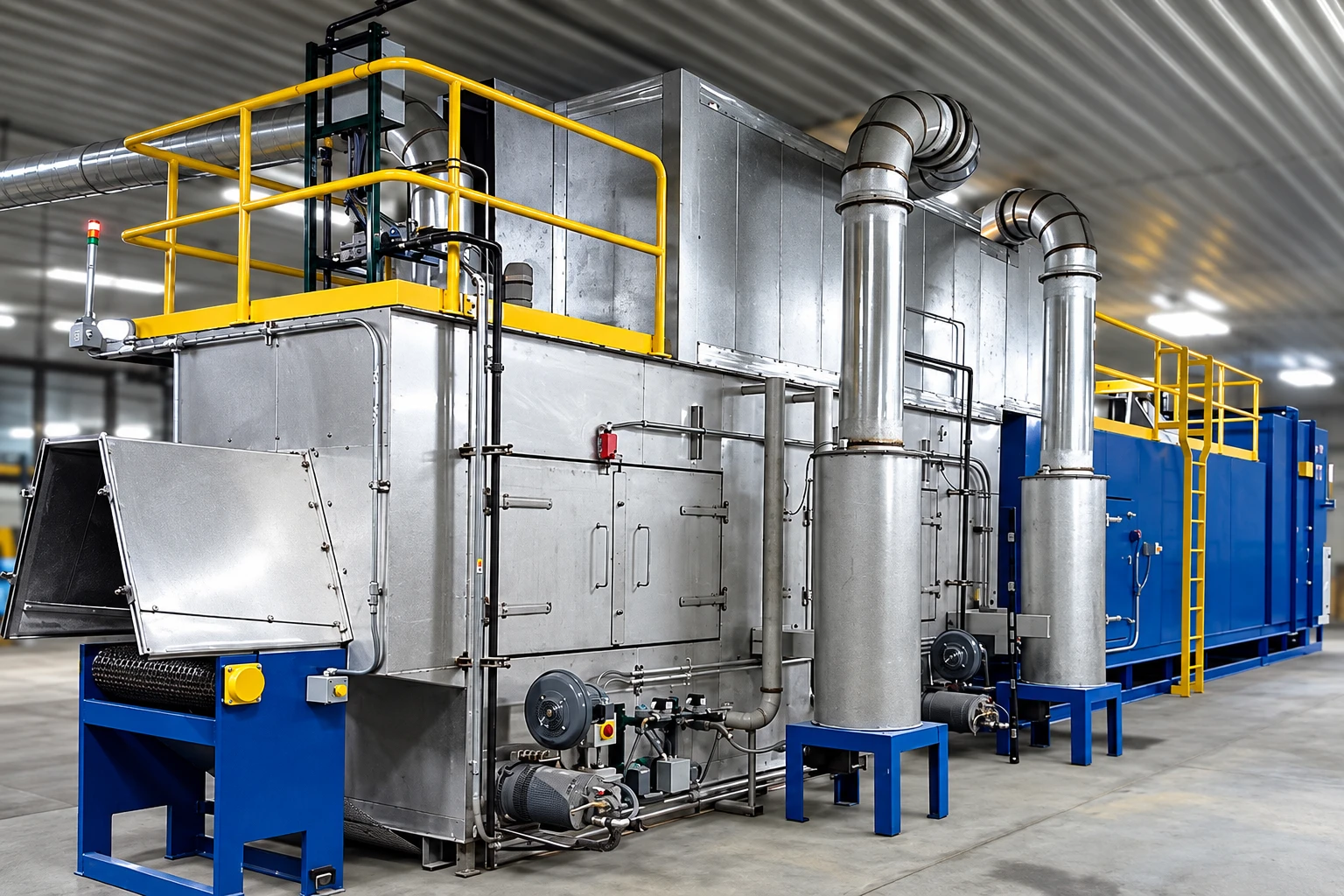
Conveyor driven belt washers—also known as conveyor washers or belt conveyor washers—are industrial parts cleaning systems used to clean parts after machining or manufacturing and to prepare parts for powder coating or liquid coating. The process may consist of a simple cleaning and rinse or a multi-stage sequence that includes conversion coating.
Industrial conveyor belt washers move parts through the spray washer on a belt-driven conveyor system. Belts are typically stainless steel flat wire mesh, balanced weave, or formed wire, although non-metallic belt options may also be used.
Parts may be loaded manually, placed in baskets or fixtures, or transferred directly from upstream conveyors to downstream operations.
Is a Conveyor Belt Washer Right for Your Parts?
A conveyor belt washer is typically the right choice for small to medium-sized parts processed continuously at high volumes, or for parts that cannot easily be suspended from an overhead conveyor. However, different washer designs may be better suited to specific part sizes, production requirements, and cleaning challenges.
- Cabinet and batch washers are well suited for lower production volumes, large or heavy parts, and mixed part runs.
- Monorail washers are designed for parts that can be suspended from an overhead conveyor, often as part of a continuous paint or powder coating line.
- Drum washers are well suited for bulk quantities of small parts, such as fasteners, that can be safely tumbled during cleaning.
- Dip tanks are suited for parts with blind holes, internal passages, or complex geometries that are difficult to reach with spray cleaning.
Conveyor Belt Washer Applications and Benefits
Conveyor belt washers are well suited for high-throughput operations, small parts, and components that cannot be easily suspended from an overhead conveyor . Adjustable belt speeds with VFD control allow cleaning time and production throughput to be matched to specific process requirements.
When the washer is used to clean and prepare metal parts prior to powder or liquid coating, a multi-stage pretreatment process is typically employed. Parts are cleaned and treated with a conversion coating before finishing, as required by the process. Proper surface preparation helps promote coating adhesion, improve corrosion resistance, and extend the service life of the finished coating.
Horizon's patented Torrent Technology™ uses rotating spray risers to deliver consistent, overlapping spray coverage across part surfaces, improving cleaning performance while reducing water and chemical consumption. By achieving effective impingement with lower water flow and pump horsepower, Torrent Technology™ also helps reduce energy use and overall operating costs.
Key Benefits
- Improves adhesion of powder or liquid coatings to the part surface
- Increases the effective longevity of the coating
- Provides continuous throughput for high-volume operations
- Supports consistent quality on metal parts
Pretreatment washers include dedicated solution or water tanks for each stage of the process. Liquid is pumped through spray nozzles while parts move continuously through the belt-driven system.
Typical Pre-Treatment Stage Sequences
The sequences below are common industry examples used to prepare metal parts for powder or liquid coating. The appropriate number of stages and chemical treatments depends on the part material, coating specifications, cleanliness requirements, and expected service environment.
- 3-Stage Pretreatment: Combined cleaning and conversion coating, followed by a rinse and a final rinse or seal. This type of sequence may be used for general powder coating applications on steel when the selected pretreatment chemistry supports combined cleaning and conversion.
- 5-Stage Pretreatment: Alkaline cleaning, rinse, conversion coating, rinse, and a final reverse osmosis (RO) rinse or seal. This type of sequence is commonly considered when coating performance, surface preparation, or corrosion resistance requirements are higher.
A properly designed pretreatment process helps improve coating adhesion, extend coating life, and support consistent finished-part quality. However, adding stages generally means a longer washer, more tanks, additional utility requirements, and greater floor space. For this reason, stage count should be discussed early in the equipment sizing process to balance cleaning performance, production throughput, and available plant space. Final stage selection should follow the coating and pretreatment chemistry suppliers' specifications.
Construction Features and Technical Specifications
Premium Construction Materials
- Stainless steel construction for drainboards, tanks, walls, and roofs.
- Stainless steel process piping.
- Stainless steel wetted pumps.
- Stainless steel or clip-on polypropylene nozzles.
- Stainless steel welded, leak-tested tanks with bottoms pitched to drain connections.
- Stainless steel tank covers with handles and latches.
Advanced Controls and Maintenance Features
- Vertical seal-less pumps with VFD control.
- Continuous header pressure monitoring.
- Maintenance access doors.
- Screens in each tank located in charge box areas ahead of the pumps.
- Optional electronic liquid level sensing and control.
- PLC with PanelView HMI for adjustment of nozzle flow, pressure, and conveyor speed, with programmable recipes for light, medium, and heavy parts.
Heating Systems
- Maxon, Eclipse, or Midco natural gas or propane-fired burners.
- Incoloy-sheathed electric immersion heaters with flanged connections for easier maintenance.
These belt conveyor spray washers utilize strategically positioned nozzles to deliver thorough cleaning and rinsing across all part surfaces. Horizon’s fully integrated conveyor parts washing systems are engineered for efficiency, reliability, and ease of maintenance.
Custom Manufacturing Solutions
Horizon Performance Technologies custom designs conveyor belt washing systems and complete finishing lines to provide the optimum equipment for each customer’s products, throughput goals, and process requirements.
Design considerations include:
- Product type and geometry
- Required throughput capacity
- Spray pattern requirements
- Belt type and width specifications
- Multiple spray application stages
- Drying system integration
- Available floor space and plant layout integration
- Utility availability and energy source requirements

In addition to durable materials, Horizon washers can be equipped with advanced control systems that feature custom recipes for different part types, soil conditions, and production requirements. This helps operators maintain consistent cleaning results across changing workloads.
Torrent Technology™ is also integrated into most belt washer applications improving coverage and energy efficiency. For more information, visit our Torrent Technology™ page.
Horizon Performance Technologies applies the same attention to detail through every phase of the project—from design and fabrication to installation, start-up, and post-installation support—to help ensure dependable equipment performance and strong process results.
Conveyor Belt Washer Accessories
Horizon offers a range of optional accessories that can improve cleaning performance, reduce maintenance, enhance process control, and support more efficient conveyor belt washer operation.

Filtering
Stainless steel bag filter housings equipped with isolation valves help maintain solution cleanliness and system reliability. Optional pressure monitoring provides feedback on filter condition and alerts operators when maintenance is required.

Magnetic Filter
A magnetic separator with drain board removes magnetic fines from the cycle water. Return water passes across the magnetic filter where fines are captured, and the unit can be removed for easier cleaning and disposal.

Internal LED Lighting
A tempered glass viewing window with externally mounted LED lights improves visibility inside the washer. Operators can turn the lighting on or off through the operator interface terminal.

Oil Coalescer
The oil coalescer removes oil and grease from the wash solution, helping reduce chemical costs, minimize frequent bath changes, prevent contamination, and lower product rejects.

Blow-Off / Drying System
Located at the washer exit, a high-efficiency blower with air knives or air cannons removes excess moisture from parts in areas where water tends to collect. This system is significantly more efficient than using compressed air.

Mist Eliminator
When the washer/coater is used for coating applications, conserving coating liquid can be economically beneficial. The mist eliminator is a low-pressure-drop, vane-type unit with stainless steel construction that traps and drains aerosolized coating liquid that would otherwise exit through the exhaust.
WATER TREATMENT SYSTEM
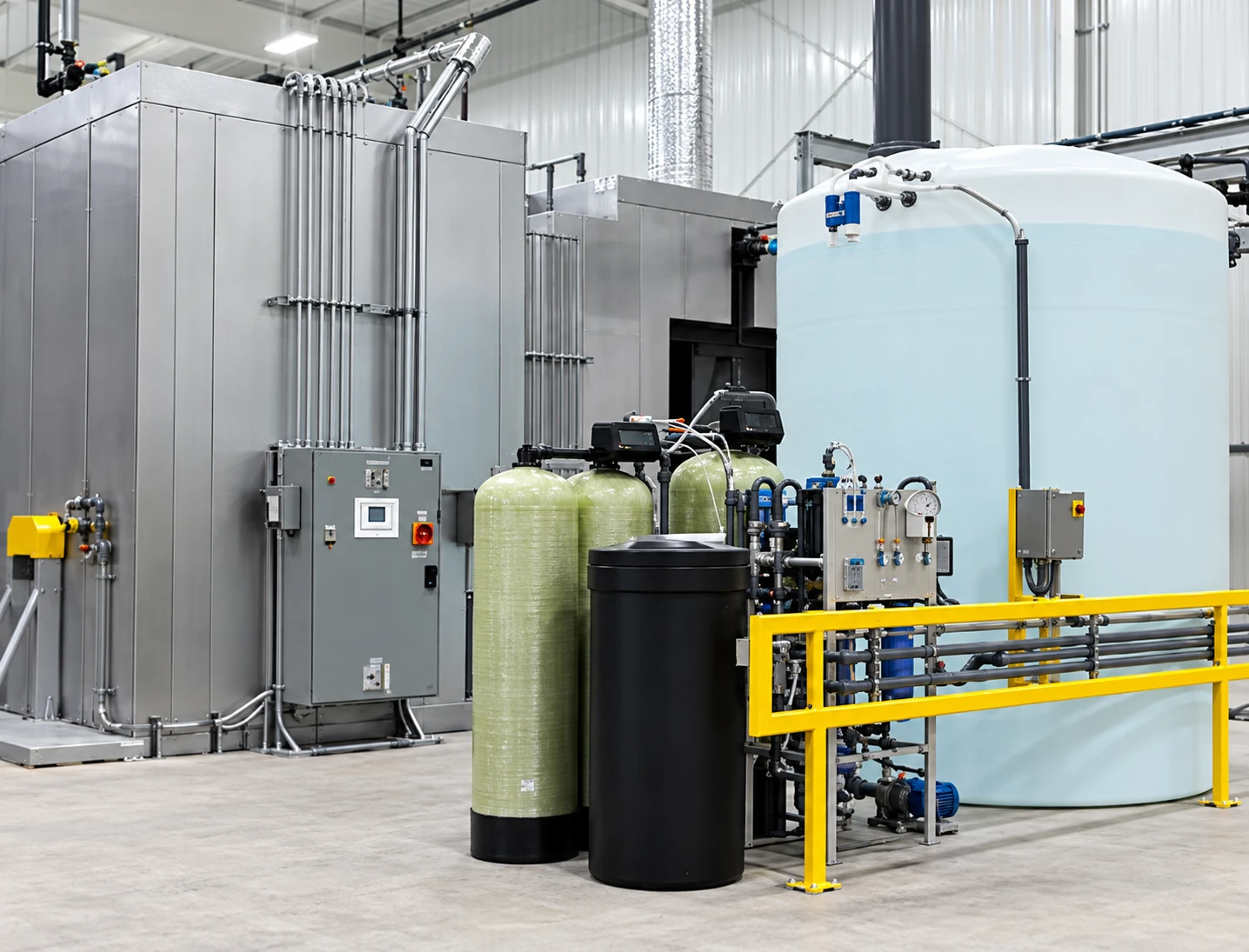
Complete water treatment systems, including reverse osmosis (RO) , are available. Using RO can reduce water consumption, improve finish quality, and decrease chemical usage. A typical Horizon water treatment system includes:
- Reverse osmosis (RO)
- Carbon filter
- Duplex water softener
- Transfer pump
- Poly RO water storage tank
- Conductivity meter and sensor for remote monitoring of stored water quality
- UV light in a 316 SS housing installed in the RO storage tank recirculation line piping for bacteria control

Post-Installation Service & Maintenance for Belt Washers
Horizon’s commitment to your equipment doesn’t end at installation. Our experienced service team provides ongoing technical support, preventative maintenance, troubleshooting, and repairs to help keep your industrial belt washer operating safely, efficiently, and reliably. Our online store provides access to over 11,500 spare parts. From conveyor belts and drive systems to pumps, spray nozzles, heating systems, filtration, and controls, we provide the expertise to maintain consistent cleaning performance, minimize production interruptions, and extend equipment life.
Learn more about Horizon’s Service & Maintenance capabilities and how we can support your equipment long after startup.
Frequently Asked Questions
WHAT IS AN INDUSTRIAL CONVEYOR BELT WASHER?
Answer: An industrial conveyor belt washer is an automated parts cleaning system that moves components through one or more washing, rinsing, and drying stages on a continuous conveyor belt. These systems are ideal for high-volume manufacturing operations requiring consistent cleaning, surface preparation, and efficient production throughput.
WHAT TYPES OF PARTS CAN BE CLEANED IN A CONVEYOR BELT WASHER?
Answer: Conveyor belt washers are commonly used to clean machined components, stamped metal parts, fabricated assemblies, and other industrial products. They are particularly effective for smaller parts or components that are difficult to suspend from an overhead conveyor. Horizon custom-engineers belt washer systems to accommodate different part sizes, geometries, materials, and production requirements.
HOW DOES TORRENT TECHNOLOGY IMPROVE INDUSTRIAL PARTS CLEANING PERFORMANCE?
Answer: Torrent Technology™ uses rotating spray nozzles to provide multidirectional coverage across part surfaces. The rotating motion increases spray impingement and helps cleaning solutions reach recessed or difficult-to-clean areas. Compared with conventional fixed-nozzle systems, this approach can improve cleaning consistency while requiring fewer spray nozzles.
HOW CAN TORRENT TECHNOLOGY™ REDUCE WATER, CHEMICAL, AND ENERGY CONSUMPTION?
Answer: Horizon's patented Torrent Technology™ achieves effective spray coverage using significantly fewer nozzles than many conventional industrial parts washers. Lower solution flow can reduce pump horsepower, electrical consumption, heating requirements, and chemical usage. These efficiencies can also reduce wastewater treatment and disposal costs, making Torrent-equipped washers an attractive option for manufacturers focused on operating costs and sustainability. Actual savings depend on the application and washer configuration.
WHAT FILTRATION AND WATER TREATMENT OPTIONS ARE AVAILABLE FOR CONVEYOR BELT WASHERS?
Answer: Horizon offers filtration and water treatment accessories to maintain cleaning solution quality and improve washer performance. Options include bag filtration, magnetic separators, oil coalescers, water softeners, and reverse osmosis (RO) systems. These technologies help remove contaminants, extend solution life, and support consistent cleaning and pretreatment results.
HOW ARE PARTS DRIED AFTER WASHING?
Answer: An optional blow-off system at the washer exit uses a high-efficiency blower with air knives or air cannons to remove water from areas where it collects. It's significantly more efficient that comporessed air. A dry-off oven can also be integrated.
HOW DO I KEEP THE WASH SOLUTION CLEAN LONGER?
Answer: Bag filtration, magnetic separators for ferrous fines, and oil coalescers that remove oil and grease all extend bath life and reduce chemical use. Reverse osmosis water treatment reduces water consumption and improves finish quality.
Ready to Optimize Your Manufacturing Process?
At Horizon, we’re not just building industrial conveyor belt washers—we’re creating engineered cleaning solutions that move your business forward in a cost-saving, efficient, and reliable way. Our conveyor parts washers are trusted by manufacturers across a wide range of industries, from automotive to aerospace. Contact us today to discuss your application and discover how a custom Horizon washer can improve your manufacturing process.
Request a Quote