

THERMOFORMING PROCESS & OVENS
WHAT IS THE THERMOFORMING PROCESS?
The thermoforming process is a manufacturing method in which a plastic sheet is heated until pliable, formed into a specific shape using a mold, and trimmed to create a finished product.
This process is widely used to produce lightweight, durable, and cost-effective plastic components across a variety of industries. Its versatility allows manufacturers to create products with intricate shapes and fine details, making it well-suited to applications that require precision and customization. Additionally, thermoforming supports a wide range of material options, enabling tailored industrial thermoforming solutions for specific performance requirements.
WHAT ARE THE BENEFITS OF INDUSTRIAL THERMOFORMING?
These advantages make it particularly well-suited to both custom industrial thermoforming applications and high-volume production environments.
Key benefits of the thermoforming process include:
-
Cost-Efficiency
Tooling and production costs are generally lower with thermoforming compared to other forming methods.
-
Flexibility
Due to its relatively simple and low-cost tooling requirements, thermoforming allows for rapid prototyping and design modifications compared to processes such as injection molding.
-
Scalability
Thermoforming is ideal for both small and large production runs, and modern thermoforming equipment makes it possible to scale production efficiently while maintaining consistent quality. For smaller runs, it offers inexpensive molds, quick setup and changeovers, and the ability to produce customized designs without the high costs associated with other manufacturing methods.
For larger production runs, advanced thermoforming systems enable high-speed production, minimize material waste through continuous processes such as roll-fed systems, and utilize durable tooling to maintain efficiency and quality over extended production cycles.
-
Material Versatility
Thermoforming works with a wide range of plastics, giving manufacturers the flexibility to select materials that meet specific application requirements, from durability and performance to appearance and finish quality.
WHAT MATERIALS ARE MOST COMMONLY USED IN INDUSTRIAL THERMOFORMING?
The most commonly used materials include:
-
-
Acrylic (PMMA)
- Polymethyl methacrylate is a synthetic resin known for its clarity and impact resistance. It is often used as a substitute for glass in products such as shatterproof windows, illuminated signs, and aircraft canopies.
-
Polypropylene (PP)
- Polypropylene is a common thermoplastic polymer. It is lightweight and resistant to chemicals, moisture, and flames.
-
Polyethylene (PE)
- Polyethylene is the most prevalent plastic. It’s durable and commonly used for packaging, plastic bags, containers, and bottles.
-
Polystyrene (PS)
- Polystyrene is a synthetic polymer that can be used in either solid or foamed forms. It is a cost-effective material commonly selected for applications that require lightweight components and economical production.
-
ABS (Acrylonitrile Butadiene Styrene)
- ABS is an opaque thermoplastic known for its toughness and impact resistance. It is commonly used for structural components, equipment housings, automotive parts, and other applications that require strength and durability.
HOW DO HORIZON OVENS IMPROVE THE THERMOFORMING PROCESS?
Thermoforming ovens are a critical component of industrial thermoforming equipment, supporting every stage of the process from consistent material heating to controlled cooling and forming accuracy. Horizon’s Cyclone Technology™ enhances each step by improving temperature uniformity, airflow control, and overall process efficiency.
-
Heating the Plastic Sheet
- The thermoforming process begins by heating a plastic sheet to a precise temperature that makes it pliable without degrading its material properties.
- Horizon industrial thermoforming ovens utilize Cyclone Technology™ to deliver uniform heat distribution throughout the chamber, reducing hot spots and helping ensure consistent material quality before forming.
-
Shaping the Plastic with a Mold
- Once heated, the plastic sheet is positioned over or into a mold where vacuum, pressure, or mechanical force is used to create the desired shape. Consistent temperature control is critical during this stage, as uneven heating can lead to warping or incomplete forming.
- Horizon ovens help maintain uniform material temperatures, supporting accurate mold conformance and improved part quality, particularly for complex geometries.
-
Cooling and Trimming the Formed Part
- After forming, the plastic component must be cooled to retain its shape before excess material is trimmed away.
- Cyclone Technology™ optimizes airflow throughout the process, improving cooling efficiency while helping maintain dimensional stability and part integrity. This can reduce cycle times and support greater production throughput.
-
Post-Processing (Optional)
- Depending on the application, thermoformed parts may undergo additional finishing operations such as painting, assembly, machining, or surface treatments.
- Horizon's consistent heating throughout the thermoforming process helps produce more uniform parts, reducing the need for corrective finishing and contributing to more efficient downstream operations.
WHAT INDUSTRIES USE INDUSTRIAL THERMOFORMING?
-
Automotive
Thermoforming is widely used in the automotive industry to manufacture interior panels, dashboards, door trims, and protective covers. The process enables the production of lightweight, durable components that help improve vehicle efficiency while maintaining high standards for appearance and performance.
-
Packaging
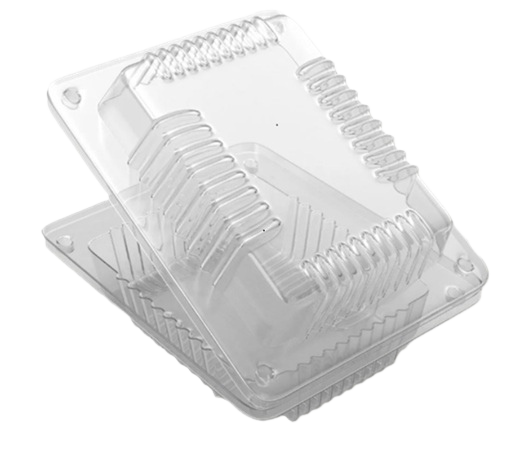
The packaging industry relies on thermoforming equipment to produce food containers, blister packs, clamshell packaging, and protective product packaging. Thermoforming offers a cost-effective solution for high-volume production while providing the design flexibility needed to accommodate a wide range of products.
-
Medical
Medical manufacturers use thermoforming to create custom trays, device housings, and sterile packaging. The process supports precise part dimensions and consistent quality, helping protect sensitive medical devices and maintain compliance with industry standards.
-
Construction
In the construction industry, thermoforming is used to produce wall panels, skylights, decorative elements, and other architectural components. The process allows manufacturers to create durable, lightweight parts that can withstand demanding environmental conditions.
-
Aerospace
Aerospace applications often require lightweight components that contribute to overall fuel efficiency and performance. Thermoforming is commonly used to manufacture interior panels and other aircraft components where weight reduction, consistency, and durability are critical.
-
Consumer Goods
Thermoforming supports the production of a wide variety of consumer products, including household items, toys, and appliance components. Its ability to accommodate complex shapes and attractive finishes makes it a popular manufacturing method for consumer-facing products.
-
Industrial Equipment & Electronics
Manufacturers use thermoforming to produce equipment housings, control panels, protective covers, and shipping trays for electronic components. The process provides a durable and cost-effective solution for protecting products during both operation and transportation.
TYPES OF INDUSTRIAL THERMOFORMING OVENS
-
Batch Thermoforming Ovens
Batch ovens provide flexibility for manufacturers processing varying sheet sizes, materials, and production schedules. These systems are commonly used for custom thermoforming applications, prototyping, and lower-volume production runs where process flexibility is important. -
Conveyor Thermoforming Ovens
Conveyor ovens are designed for continuous production environments where thermoplastic sheets move through the heating process on an automated line. These systems support high-volume manufacturing operations requiring consistent heating, repeatable forming conditions, and efficient throughput. -
Walk-In Thermoforming Ovens
Walk-in ovens are ideal for heating oversized sheets, large molds, and high-capacity production loads. Their spacious design allows operators to load carts, racks, and large workpieces directly into the chamber, making them a practical solution for demanding industrial thermoforming applications.
Ready to Optimize Your Manufacturing Process?
At Horizon, we're not just building industrial ovens; we're creating solutions that drive your business forward in a cost-saving, eco-friendly way. Our ovens are engineered for precise temperature control, consistent heating, and reliable performance across demanding industrial applications.
Contact us today to discuss your needs and discover how a custom Horizon industrial thermoforming oven with Cyclone Technology can revolutionize your manufacturing process!