

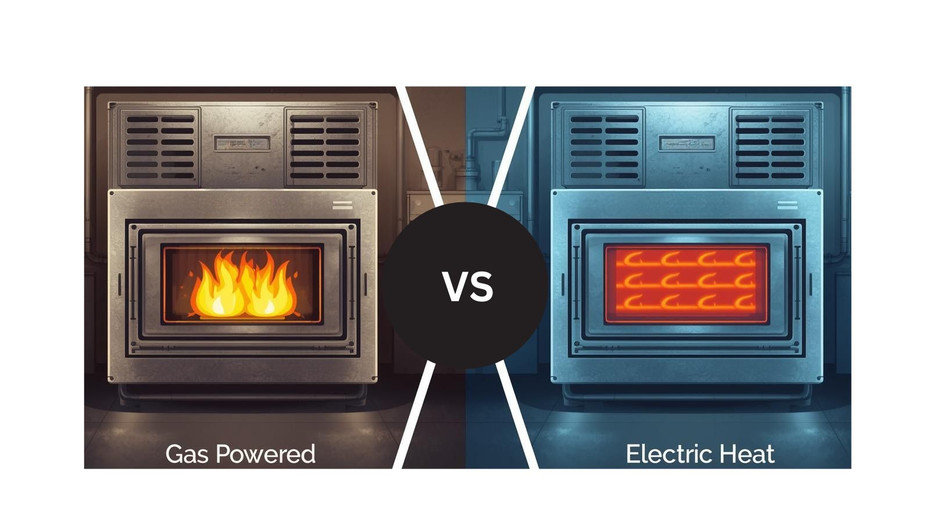
Selecting the optimal industrial oven for a manufacturing environment is a capital decision with long-term operational implications. The choice between gas and electric heating defines installation requirements, throughput capability, operating costs, and environmental performance. Although both technologies deliver viable options for thermal processing across multiple industries, each presents specific engineering and application advantages.
Horizon Performance Technologies has introduced innovations in gas-powered equipment that shift traditional assumptions. The patented Cyclone Technology™ leverages advanced airflow recirculation and exhaust optimization to elevate gas efficiency and temperature performance to levels historically associated with electric ovens.
The following comprehensive guide provides a structured methodology to evaluate which power source aligns best with production goals, infrastructure constraints, and sustainability initiatives.
Quick Comparison Table: Gas vs Electric
|
Decision Factor |
Gas Industrial Ovens |
Electric Industrial Ovens |
|
Upfront Equipment Cost |
Lower |
Higher |
|
Installation Complexity |
Higher (fuel lines, ventilation) |
Lower (existing electrical service may suffice) |
|
Operating Cost |
Often lower per BTU |
Depends on regional electricity rates |
|
Efficiency |
Historically moderate; high with Cyclone Technology™ |
Very high (95–99% heat conversion) |
|
Temperature Uniformity |
Good; excellent with Cyclone Technology™ |
Excellent |
|
Scalability for Large Systems |
Strong advantage |
Limited by power availability |
|
Environmental Impact |
Low to moderate emissions depending on design |
Zero point-of-use emissions (contingent on product) |
|
Maintenance |
Burner system inspections required |
Heating element replacement |
|
Ideal Use Cases |
High-volume heat treating, drying, curing at scale |
Precision curing, clean applications |
Key Factors in Choosing Between Gas and Electric Industrial Ovens
Initial Investment and Installation Costs
The capital expenditure profile differs significantly between the two power types.
Gas ovens typically present:
- Lower base equipment costs due to relatively simple heating components
- Higher infrastructure expense, including fuel piping, venting, and combustion safety systems
- Possible additional installation labor for permits and regulatory compliance
Electric ovens generally involve:
- Higher upfront cost related to heating elements and power delivery controls
- Simpler installation if the facility already features adequate 480V/3-phase service
- Potentially faster commissioning
Organizations expanding operations into buildings without gas service often find the all-electric route financially advantageous, even before considering sustainability goals.
Operating Cost Analysis
Ongoing operating cost depends primarily on regional energy pricing. Natural gas has traditionally offered a lower cost per BTU than electricity. However, efficiency is equally influential in lifecycle cost:
- Conventional gas ovens experience 20 to 50 percent heat loss through exhaust primarily depending on the operating temperature and oven classification (higher temps like furnaces can lose more)
- Electric ovens efficiently convert consumed electricity into usable heat
- Cyclone Technology™ gas and electric ovens dramatically reduce waste by minimizing heat loss through oven walls
A more efficient gas system narrows the conventional gap, especially in states with high electricity rates. For practical strategies to reduce costs, see our guide on the top ways to improve industrial oven efficiency.
Energy Efficiency Comparison
|
Metric |
|
Conventional Gas |
|
Electric |
|
Thermal Efficiency |
|
60–70% |
|
95–99% |
|
Heat Recovery |
|
Moderate |
|
High |
|
Airflow Velocity |
|
Standard |
|
Standard |
Optimized recirculation increases air velocity across the work surface, producing faster heat transfer. Less energy escapes through ducting, improving overall thermal balance.
Performance Characteristics
Temperature Control and Precision
Electric ovens are well known for fine precision and stability, often achieving tight control ranges suitable for:
- Aerospace composite curing
- Electronic component processing
- Medical device manufacturing
Horizon’s Cyclone Technology™, paired with Cure Commander™ (Horizon’s proprietary PLC software for curing ovens) provides real-time thermal feedback, bringing gas-powered curing systems into comparable tolerances with electric. This marriage of airflow control and intelligent monitoring yields uniform cure profiles even in large chambers.
Heat-Up Times and Recovery Rates
Gas systems maintain an inherent speed advantage, delivering high BTU output for:
- Faster warm-up cycles
- Minimal downtime between batches
- Improved throughput in continuous operations
Cyclone airflow maintains high convective heat transfer coefficients, accelerating load recovery when product mass disrupts temperature stability.
Temperature Uniformity
Thermal uniformity is essential in process repeatability. Electric ovens are strong performers due to distributed heating elements. However, Cyclone systems utilize high-volume recirculation to achieve uniformity values of ±3°F or better across expansive areas.
Uniformity directly impacts:
- Cure completeness
- Distortion risks
- Scrap rates and rework requirements
Capacity and Scalability Considerations
Gas remains the preferred architecture for large-scale or high-throughput systems due to:
- Greater heating power availability
- Lower operating cost per square foot
- Better response to temperature load variation
Electric ovens excel in compact applications, R&D labs, and regulated clean areas requiring zero emissions and lower surface contamination risk.
Application-Specific Considerations
Best Applications for Gas Industrial Ovens
- Automotive structural component drying
- Metal stress relieving and forging heat treat
- Powder coating cure lines
- Aerospace composite preheating at scale
- Industrial finishing lines
Gas units align with continuous processes that prioritize speed and stable performance under large batch thermal loads.
Best Applications for Electric Industrial Ovens
- Aerospace adhesive bonding and post-cure
- Semiconductor manufacturing and electronics potting
- Sterilization for medical devices
- Precision and laboratory environments
Electric units offer the cleanest thermal environment where off-gassing or contamination must be strictly controlled.
Infrastructure Requirements
Gas Line Installation and Requirements
Facilities must ensure:
- Safe routing of natural gas or propane supply
- Compliance with codes for pressure regulators and isolation valves
- Adequate combustion air and exhaust systems
- Burner tuning and periodic certification
Electrical Requirements and Capacity
Electric ovens require:
- Sufficient 3-phase power capacity
- Proper equipment grounding and overload protection
- Panelboard upgrades if amperage demand exceeds infrastructure limits
A load study is recommended during project planning to avoid unforeseen utility upgrades.
Environmental Impact and Sustainability
Carbon Footprint Comparison
Electric ovens produce no point-of-use emissions. Total sustainability impact depends on the carbon intensity of the electrical grid. Gas ovens equipped with Cyclone Technology™ frequently surpass aged or inefficient electric units in total carbon performance if electricity is sourced primarily from fossil fuels.
Emissions and Air Quality
- Electric: No combustion gases, reduced permitting requirements
- Gas: Potential emissions of CO and NOₓ, improved significantly by advanced burner design and reduced exhaust flow in Cyclone systems
Air quality strategies, such as reclaiming waste heat or integrating scrubbers, are easier to implement when exhaust volumes are minimized.
Maintenance and Long-Term Costs
|
Inspection/Service Item |
Gas Oven |
Electric Oven |
|
Burners & Ignition |
Routine calibration required |
Not applicable |
|
Exhaust/Flue |
Cleaning and compliance |
Not required |
|
Heating Source |
Long life |
Replacement over time |
|
Fans, motors, and controls |
Shared across both |
Shared across both |
Gas installations require integrity checks to mitigate combustion risk, while electric ovens incur eventual heating element replacements. Predictive maintenance solutions embedded into modern controls support cost containment for either option.
When to Choose Gas vs. Electric
|
Decision Factor |
Prefer Gas |
Prefer Electric |
|
Large workloads, high mass, and continuous duty |
✔ |
|
|
Tight precision and controllability |
✔ |
|
|
Limited or costly electrical infrastructure |
✔ |
|
|
Cleanroom or low-emission environment |
✔ |
|
|
Priority on total energy optimization |
✔ (Cyclone) |
✔ |
|
Minimized mechanical maintenance |
✔ |
Conclusion: A Modern Re-Evaluation of Gas vs. Electric
For decades, the industrial thermal processing sector accepted a straightforward division:
- Gas for throughput, durability, and affordability
- Electric for clean operation and precise control
Horizon Performance Technologies has transformed that landscape. Cyclone Technology™ enhances gas oven performance by delivering:
- Rapid heat-up and recovery
- Superior temperature uniformity
- Energy savings that rival electric systems
- Reduced environmental emissions
Manufacturing leaders now have a compelling option when balancing productivity, quality, cost efficiency, and sustainability. When evaluated holistically, gas and electric ovens are no longer defined by rigid trade-offs.
The most appropriate choice results from aligning power source capabilities with process specifications, facility resources, and strategic energy policies. With advanced solutions available, industrial buyers can pursue both operational excellence and measurable sustainability gains in a single equipment investment.