
INDUSTRIAL POWDER COATING OVENS & PROCESS
WHAT IS POWDER COATING?
Powder coating is a finishing process in which a dry, powdered paint or resin is applied to a surface, then cured in an industrial powder coating oven where heat melts the powder, lets it flow into a continuous film, and cross-links it into a hard, durable finish. This technique is widely used in various industries for its efficiency, environmental benefits, and high-quality finish.
THE POWDER COATING PROCESS, STEP BY STEP
- Pretreatment: Parts are cleaned and often given a conversion coating in a spray washer, such as a belt washer or monorail washer , to prepare the surface for proper powder coating adhesion.
- Dry-Off: A dry-off oven removes residual moisture from pretreated parts before powder application, helping ensure a clean, dry surface for coating.
- Application: Powder is typically applied using electrostatic spray equipment. Alternatively, parts may be preheated and dipped into a fluidized bed of powder coating material.
- Curing: A powder coating oven heats the coated parts to the required temperature, allowing the powder to melt, flow, and, for thermoset coatings, cross-link into a durable finish.
- Cooling: Following curing, parts are allowed to cool to an appropriate handling temperature before inspection, packaging, or further processing.
Horizon Performance Technologies designs complete industrial finishing systems that integrate these process stages into a coordinated production line. Horizon also provides individual industrial parts washers and ovens to expand, upgrade, or optimize existing powder coating operations.
TYPES OF INDUSTRIAL POWDER COATING OVENS
Industrial Batch Powder Coating Ovens
Batch ovens provide flexibility for manufacturers processing varying part sizes, production schedules, or coating requirements. These systems are commonly used when product mixes or production volumes change frequently, making them a versatile option for a wide range of powder coating applications.
Conveyor Powder Coating Ovens
Conveyor ovens are designed for continuous production environments where products move through the curing process on an automated line. They are commonly used in high-volume manufacturing operations that require consistent throughput and repeatable curing performance.
Walk-In Powder Coating Ovens
Walk-in ovens are among the most popular types of powder coating equipment due to their ability to accommodate oversized parts, large assemblies, and high-capacity batch processing. These ovens allow operators to load carts, racks, and large components directly into the curing chamber, making them a practical solution for manufacturers with varying production requirements.
Custom Oven Solutions
Many operations require powder coating equipment configured around specific production requirements, part sizes, and facility constraints. Horizon designs custom industrial ovens to support a wide range of powder coating applications, helping manufacturers select the right batch, conveyor, or walk-in oven configuration for their process.
WHAT MATERIALS ARE MOST COMMONLY POWDER COATED?
-
Metals
Steel, Aluminum, and Iron are the most common materials for powder coating. Galvanized steel requires special pre-treatment to ensure proper adhesion of the powder coating.
-
MDF (Medium Density Fiberboard)
Special powders and techniques allow MDF and other wood products to be powder-coated, particularly in the furniture industry.
-
Plastics and Composites
Certain plastic and composite materials can be powder-coated using low-temperature curing powders and techniques.
POWDER COATING CURE SCHEDULES: WHY PART TEMPERATURE MATTERS
Every powder coating has a cure schedule specified by its manufacturer. This schedule defines the temperature the part itself must reach and how long it must remain at that temperature. Many standard powder coatings cure at approximately 350°F–400°F for 10–20 minutes at part temperature, but the manufacturer's technical data sheet should always be the authority. Two important considerations follow:
- Heavy Parts Take Longer. Thick steel takes longer to reach the required cure temperature than thin sheet metal in the same oven. Mixed loads must therefore be planned around the heating requirements of the heaviest part.
- Uneven Heat Causes Uneven Cure. Under-cured areas may experience poor adhesion and reduced chemical resistance, while excessive heat exposure can cause discoloration or degradation. Consistent airflow and temperature uniformity help ensure every part in the load receives the heat necessary for proper curing.
HOW DOES CYCLONE TECHNOLOGY™ IMPROVE THE POWDER COATING PROCESS?
Cyclone Technology improves the powder coating process by delivering consistent airflow, precise powder coating oven temperature control, and uniform heat distribution throughout the curing chamber, resulting in more reliable curing, improved coating adhesion, and a higher-quality finish.
When it comes to industrial powder coating ovens, Horizon Industrial Ovens with Cyclone Technology provide significant advantages at each step of the powder coating process, offering superior energy efficiency, uniform heat distribution, and improved control over curing conditions.
Consistent Heat Distribution
Delivers uniform heat across the entire load, helping eliminate hot and cold spots while ensuring consistent coating quality and repeatable results.
Precision Process Control
Provides accurate control over heating temperatures and cycle times to meet specific process requirements, improve coating consistency, and reduce the risk of under- or over-curing.
Rapid Temperature Recovery
Quickly restores operating temperatures between loads or after door openings, minimizing production delays, maintaining process consistency, and improving overall throughput.
Versatile Preheating Capabilities
Provides controlled, uniform heating for fluidized bed coating applications, heavy components, and thick materials that require preheating to achieve proper coating adhesion and coverage.
Optional Integrated Cooling Zones
Incorporates cooling zones when required to help parts reach appropriate handling temperatures, support downstream operations, and maintain an efficient production workflow.
Energy Use and Efficiency
Horizon's Cyclone Technology significantly reduces energy consumption through advanced insulation and airflow management. Horizon’s Cyclone Technology™ fans deliver the same airflow volume using just 5 HP, compared to the 20–25 HP typically required by conventional industrial ovens. This represents a 75–80% reduction in fan horsepower, helping manufacturers reduce utility costs and improve long-term operating efficiency without compromising curing quality.
WHAT INDUSTRIES USE POWDER COATING?
-
Automotive
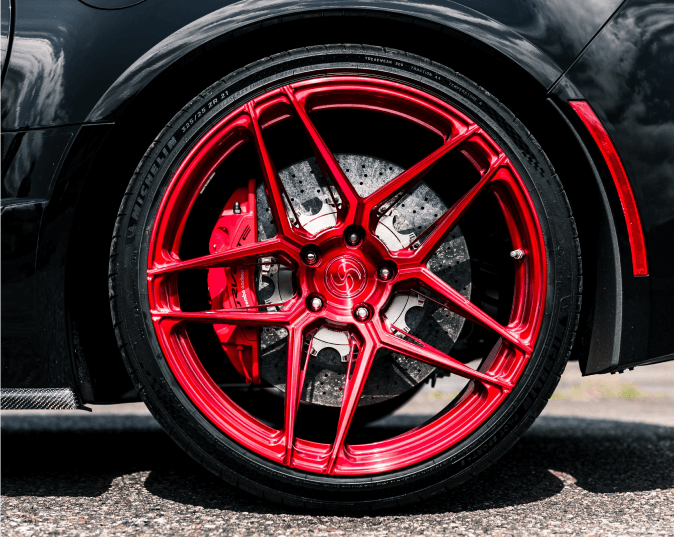
Used for coating car parts like wheels, frames, and body panels, offering durability and resistance to harsh environmental conditions.
-
Appliances
Common in the production of household appliances such as washing machines, refrigerators, and microwaves, providing a durable and attractive finish.
-
Furniture
Powder coating is applied to metal and wood furniture for both indoor and outdoor use, providing a variety of colors and finishes.
-
Construction
Used for coating architectural elements like window frames, doors, and metal roofing, ensuring long-lasting protection against the elements.
-
Industrial Equipment
Heavy machinery, tools, and equipment benefit from powder coating, which protects against wear and corrosion.
POWDER COATING VS. PAINT
Powder coating can produce a thicker, more uniform finish in a single application than many conventional liquid paints. Because powder coatings contain little to no solvent, they generate significantly fewer volatile organic compound (VOC) emissions during application. Oversprayed powder can also often be reclaimed and reused, helping reduce material waste. When properly applied and cured, powder coatings typically provide excellent resistance to chipping, scratching, and corrosion.
Considerations: Powder coating requires a curing oven, and the parts being coated must be able to withstand the required curing temperatures. Liquid paint may offer advantages for certain applications, particularly when coating heat-sensitive materials, producing extremely thin finishes, or accommodating frequent color changes.
FREQUENTLY ASKED QUESTIONS
Q: AT WHAT TEMPERATURE DOES A POWDER COATING OVEN RUN?
A: Many standard powders cure at roughly
350°F–400°F part temperature.
The exact temperature and time are specified
in the powder manufacturer's cure schedule.
Q: HOW LONG DOES POWDER COATING TAKE TO CURE?
A: Typically 10–20 minutes once the part
reaches cure temperature. Heavy parts take
longer to heat, which extends total oven time.
Q: WHAT IS THE DIFFERENCE BETWEEN BATCH AND
CONVEYOR POWDER COATING OVENS?
A: Batch ovens suit changing part mixes and
lower volumes. Conveyor ovens suit continuous,
high-volume lines with consistent parts.
Walk-in ovens are batch ovens sized for large
parts or carts.
Q: CAN POWDER COATING BE APPLIED TO MATERIALS
OTHER THAN METAL?
A: Yes. MDF, some plastics, and some composites
can be powder-coated using low-temperature
powders and appropriate preparation.
Q: IS POWDER COATING BETTER THAN PAINT?
A: For durability and low VOCs, it usually is,
but it requires a curing oven and heat-tolerant
parts. Liquid paint is often better for very
thin films or frequent color changes.
Q: WHAT EQUIPMENT DO YOU NEED FOR INDUSTRIAL
POWDER COATING?
A: A pre-treatment washer, dry-off oven,
application booth and spray equipment,
curing oven, and a way to move parts between
them. Horizon builds the washers, ovens,
and complete finishing systems.
Ready to Optimize Your Manufacturing Process?
At Horizon, we're not just building industrial ovens; we're creating solutions that drive your business forward in a cost-saving, eco-friendly way. As trusted powder coating oven manufacturers, we engineer each system to maximize efficiency, minimize energy use, and deliver a flawless finish across a wide range of materials and industries.
Our industrial powder coating ovens are designed to deliver precise temperature control, consistent performance, and long-term reliability in demanding production environments.
Contact us today to discuss your needs and discover how a custom Horizon powder coating oven with Cyclone Technology™ can revolutionize your manufacturing process!