

INDUSTRIAL TEMPERING PROCESS & TEMPERING OVENS
WHAT IS THE TEMPERING PROCESS?
The tempering process is a heat treatment method used to reduce brittleness and improve the toughness of hardened metals, particularly steel, while maintaining strength and hardness.
Tempering is a heat treatment process applied to metals, particularly steels, to improve toughness and relieve internal stresses introduced during hardening. After hardening, materials can become excessively brittle and prone to failure under stress. Tempering adjusts the material’s microstructure to achieve a more balanced combination of hardness and durability. Industrial tempering ovens provide a controlled environment for the precise heating and cooling required during tempering.
WHY IS TEMPERING PERFORMED IN MANUFACTURING?
These outcomes are critical in industrial applications where components must withstand mechanical stress, impact, and long-term use. The key benefits of the tempering process include:
-
Improve Toughness
Tempering steel increases its toughness, allowing it to absorb energy and resist impact without fracturing. This is crucial for materials used in dynamic or high-stress environments
-
Relieve Internal Stresses
The hardening process can introduce internal stresses into the material, which can cause distortion or cracking. Tempering hardened steel relieves these stresses, stabilizing the material's structure.
-
Reduce Brittleness
Hardening processes like quenching can leave steel extremely hard but also brittle, making it susceptible to cracking. Tempering reduces this brittleness, improving the material's toughness and making it more durable.
-
Adjust Hardness
Tempering allows for precise control over the final hardness of the material. By adjusting the tempering temperature and time, manufacturers can achieve the desired balance between hardness and toughness.
-
Enhance Wear Resistance
In some situations, tempering can enhance the wear resistance of the material by refining the microstructure and improving the distribution of carbide particles within the steel.
WHAT MATERIALS ARE MOST COMMONLY TEMPERED?
The most commonly tempered materials include:
-
Carbon Steel
Carbon steel is commonly tempered after hardening to reduce brittleness and improve toughness. The exact tempering temperature depends on the desired balance between hardness and toughness.
-
Alloy Steel
Alloy steels, which contain additional elements like chromium, nickel, or molybdenum, are often tempered to optimize their mechanical properties for specific applications. -
Tool Steel
Tool steels, used for cutting, shaping, and forming tools, are tempered to achieve a balance between hardness and toughness, making them durable under high stress. -
Stainless Steel
Certain grades of stainless steel, especially martensitic stainless steel, are tempered to improve corrosion resistance and toughness after hardening. -
Cast Iron
Some types of cast iron, such as malleable iron, undergo tempering to improve ductility and reduce brittleness. -
Non-Ferrous Alloys
Includes titanium alloys and copper alloys (bronze and brass), tempering adjusts the alloy’s hardness and stress resistance. It also improves fatigue resistance. -
Superalloys
Superalloys contain elements like nickel, cobalt, and iron which are used in extreme environments. Tempering increases heat and oxidation resistance. -
Glass
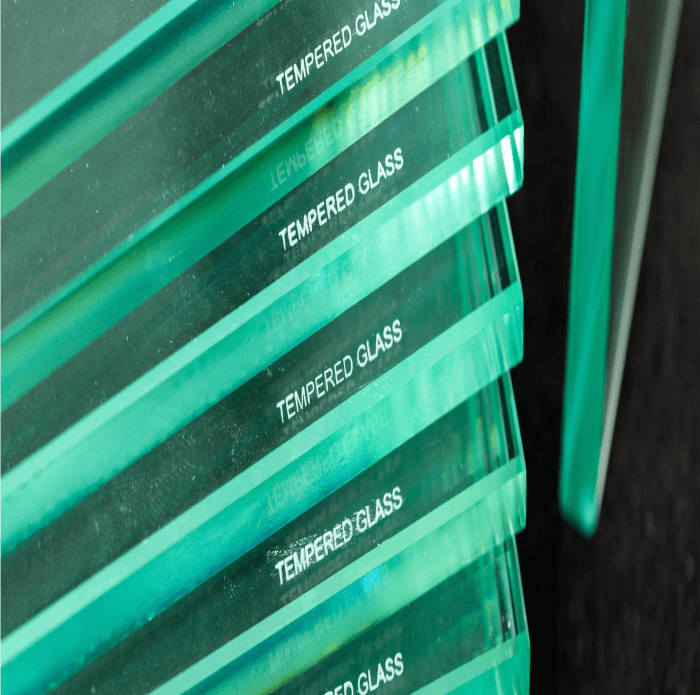
While not a metal, glass is commonly tempered, strengthening it and making it shatter-resistant for use as safety glass in automotive windows, electronics, and other applications. -
Spring Materials
Spring steel, used in automotive suspensions and industrial machinery, is tempered to enhance elasticity and fatigue resistance.
HOW DOES CYCLONE TECHNOLOGY IMPROVE INDUSTRIAL TEMPERING OVENS?
Cyclone Technology™ introduces advanced airflow dynamics to address the limitations of traditional industrial tempering ovens. By using high-velocity, precisely controlled air circulation, it enhances heat transfer efficiency and maintains stable processing conditions throughout the tempering cycle.
-
Temperature Uniformity
Traditional tempering ovens can develop temperature gradients that lead to inconsistent material properties. Cyclone Technology™ delivers uniform airflow throughout the chamber (to +/-3°F or better), eliminating hot and cold spots and helping ensure consistent hardness, toughness, and mechanical performance across every part.
-
Faster Cycle Times
High-velocity airflow improves heat transfer efficiency, reducing the time required to reach and maintain target tempering temperatures. Controlled cooling also helps shorten overall process cycles, increasing throughput without sacrificing quality. -
Enhanced Energy Efficiency
By optimizing airflow and heat distribution, Cyclone Technology makes more effective use of available energy. This reduces operating costs and helps manufacturers maintain process temperatures with fewer resources. -
Minimized Thermal Stress
Uneven heating and cooling can introduce thermal gradients that increase the risk of cracking, warping, or distortion. Cyclone Technology maintains consistent airflow patterns that help preserve dimensional stability and material integrity throughout the tempering cycle. -
Improved Product Quality
Precise temperature control during heating, soaking, and cooling produces more consistent mechanical properties. The result is improved hardness, toughness, ductility, and overall product reliability. -
Adaptability for Different Materials
Different materials require different tempering profiles. Cyclone Technology provides customizable airflow and temperature control capabilities that can be tailored to a wide range of metals, alloys, part geometries, and manufacturing requirements.
WHAT INDUSTRIES USE INDUSTRIAL TEMPERING?
Key applications include:
-
Automotive
Components like gears, shafts, springs, and fasteners are tempered to ensure they can withstand the stresses and strains of automotive use. Auto glass is tempered to make it less resistant to shattering. -
Aerospace
Aerospace components, often made from high-strength steels and alloys, are tempered to achieve the necessary balance of toughness, hardness, and resistance to fatigue. -
Tool and Die Manufacturing
Tools such as drill bits, dies, punches, and cutting tools are tempered to maintain sharpness and durability during use. -
Construction
Structural steel components, such as beams and supports, may be tempered to improve their load-bearing capacity and resistance to impact. -
Oil and Gas
Tempering is used in the manufacturing of pipelines, valves, and drilling equipment to enhance their strength and resistance to wear in harsh environments. -
Defense and Military
Components for military vehicles, weapons, and armor are tempered to ensure they can withstand extreme conditions and impacts.
TYPES OF INDUSTRIAL TEMPERING OVENS
-
Batch Tempering Ovens
Batch ovens provide flexibility for manufacturers processing varying part sizes, production schedules, or heat treatment requirements. These ovens are commonly used when production volumes fluctuate or when different materials require unique tempering profiles. -
Conveyor Tempering Ovens
Conveyor ovens are designed for continuous processing environments where parts move through the tempering cycle on an automated production line. These systems support high-volume manufacturing operations requiring consistent throughput and repeatable heat treatment results.
-
Walk-In Tempering Ovens
Walk-in ovens are well suited for oversized components, large assemblies, and high-capacity batch processing. These ovens allow operators to load carts, racks, and large workpieces directly into the chamber, making them a practical solution for demanding industrial heat treatment applications. -
Custom Tempering Oven Solutions
Many tempering operations require equipment configured around specific production requirements, material characteristics, part dimensions, and facility constraints. Horizon designs custom industrial ovens to support a wide range of tempering applications, helping manufacturers select the right batch, conveyor, or walk-in configuration for their process.
Ready to Optimize Your Manufacturing Process?
At Horizon, we're not just building industrial tempering ovens; we're creating solutions that drive your business forward in a cost-saving, eco-friendly way. Our industrial tempering ovens are engineered for precise temperature control, consistent performance, and long-term reliability in demanding production environments.
Contact us today to discuss your needs and discover how a custom Horizon oven with Cyclone Technology™ can revolutionize your manufacturing process!