

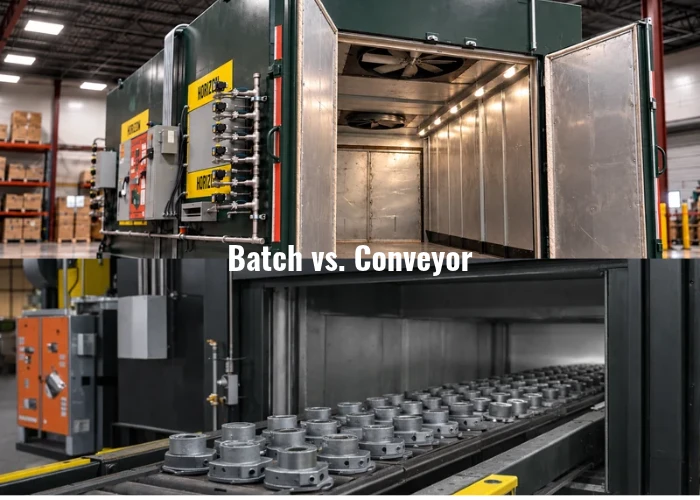
Batch Ovens vs. Continuous Ovens: Which Is Right for Your Process?
Choosing the right industrial oven is more than a question of heating capacity. For manufacturers evaluating a batch oven vs. continuous oven, the decision can significantly impact production efficiency, operating costs, floor space, and future growth. Both types offer advantages, but the best solution depends on how products move through your facility, the consistency of your production requirements, and your long-term manufacturing goals. Understanding these differences helps plant managers and engineers select equipment that delivers the greatest value throughout its operating life.
What is a Batch Oven, and When Does It Make Sense?
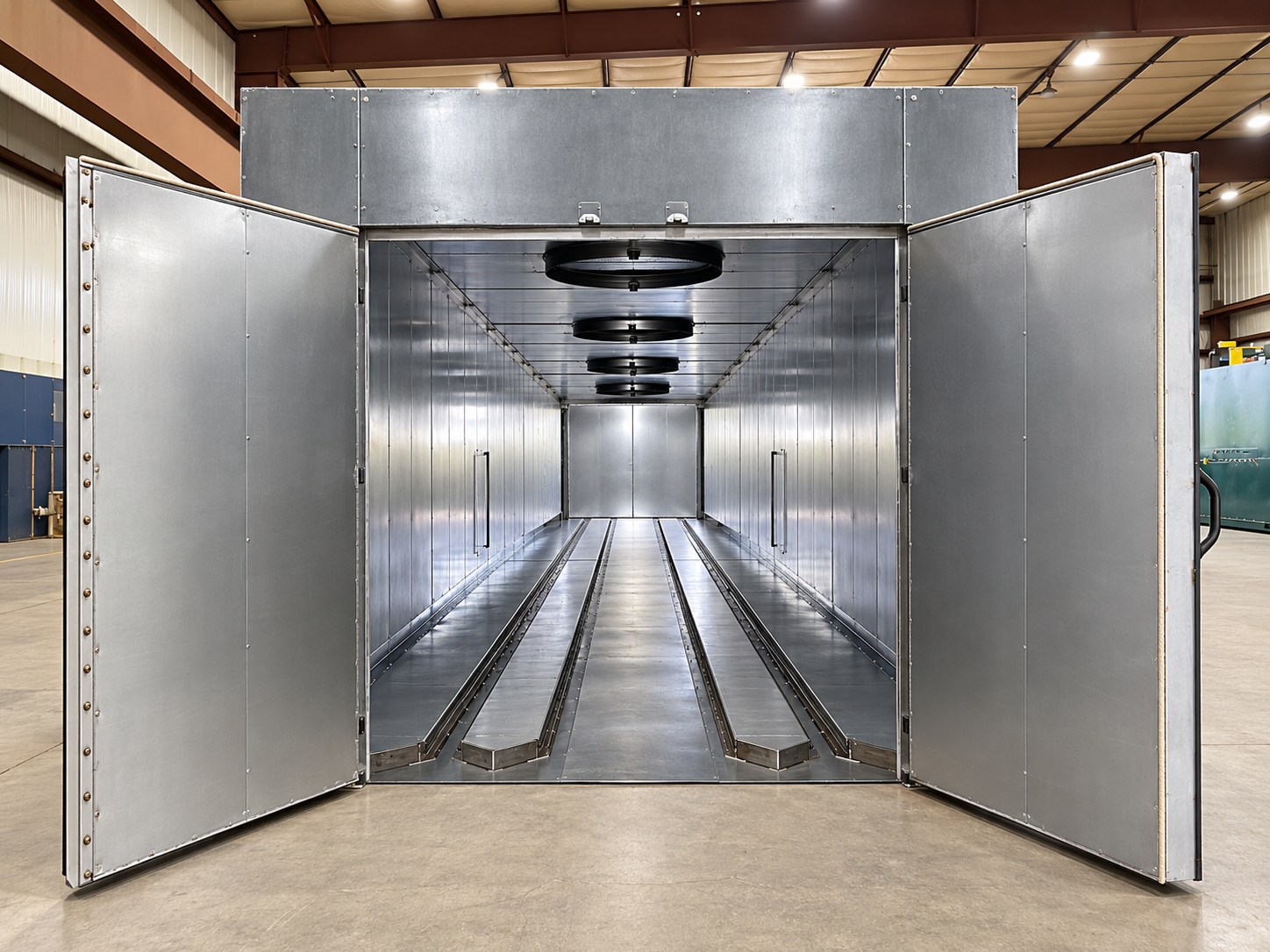
A batch oven operates by processing a defined quantity of parts during an individual heating cycle. Once the cycle is complete, the load is removed and the oven is prepared for the next group of products.
Batch ovens are particularly valuable when manufacturing involves:
-
Different part sizes, weights, or configurations
-
Frequent product changes or varying temperature profiles
-
Large, heavy, or irregularly shaped components
-
Lower production volumes or intermittent operations
-
Processes requiring extended heating or controlled cooling cycles
For example, a manufacturer producing several types of fabricated metal assemblies may benefit from a batch oven because production schedules and part dimensions frequently change. Batch ovens also allow operators to adjust processing parameters between loads without affecting an entire production line.
Explore Horizon's Industrial Batch Ovens for examples of equipment designed around varying production requirements.
What is a Continuous (Conveyor) Oven, and When Does It Make Sense?
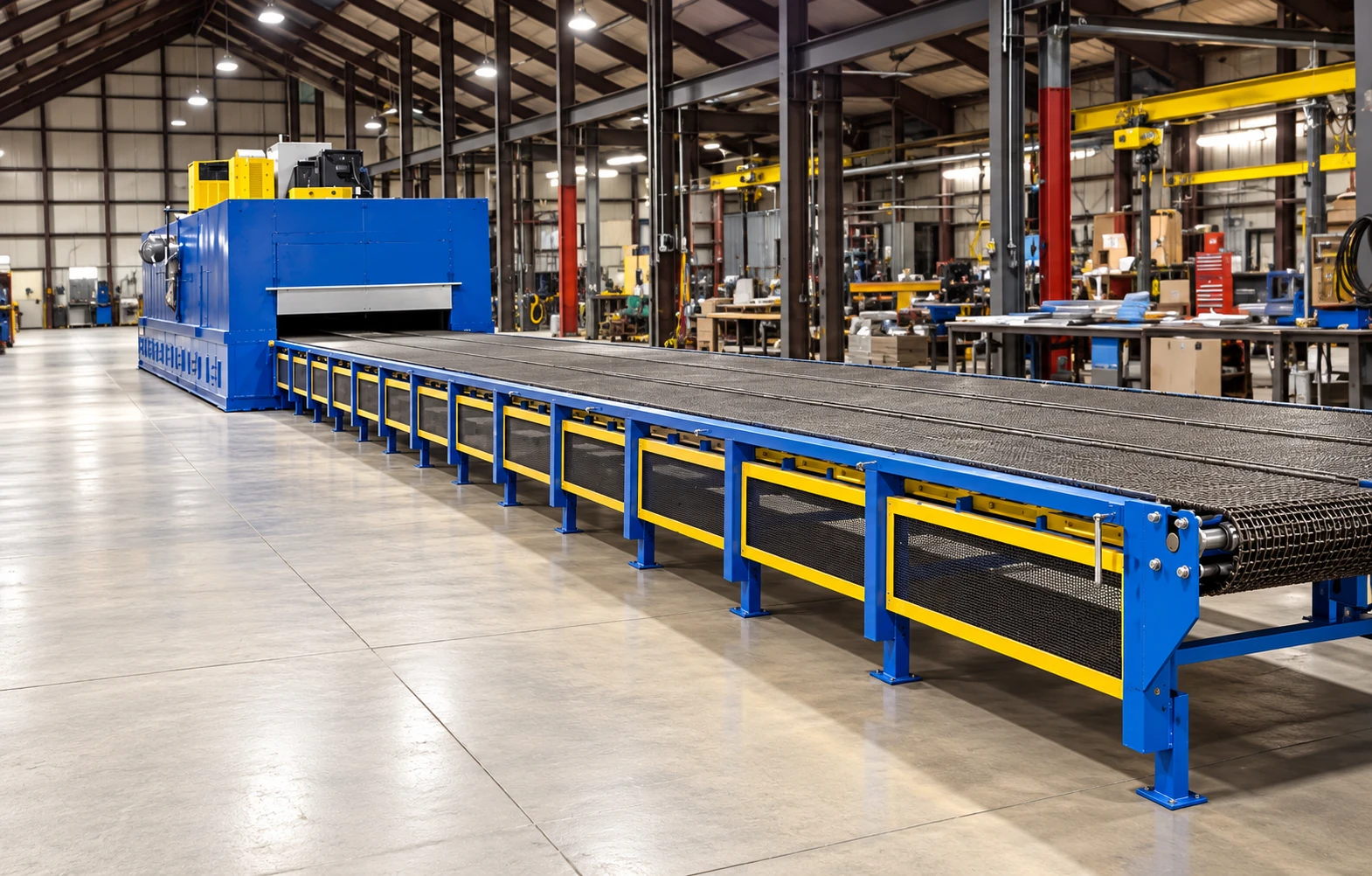
Continuous ovens use an automated conveying system to transport products through a heated production line at a controlled rate. Depending on the application, products may travel on mesh belts, rollers, chains, or overhead conveying systems.
These ovens are especially effective when:
-
Production volumes are consistently high
-
Parts have similar dimensions and processing requirements
-
Products must move directly between manufacturing operations
-
Automated material handling is a priority
-
Predictable processing times are essential
For example, an automotive components manufacturer producing thousands of similar parts daily may achieve greater efficiency with a continuous curing oven integrated into its production line. Continuous ovens can also incorporate multiple heating zones, allowing manufacturers to manage temperature profiles as products move through the process.
Explore Horizon's Industrial Conveyor Ovens to see available configurations.
Throughput and Production Volume: The Deciding Factor for Most Facilities
Production volume is often the most influential factor when comparing batch and continuous ovens. However, maximum equipment capacity alone does not determine actual manufacturing throughput.
Batch oven throughput depends on the number of parts per load and the total cycle time, including loading, heating, required processing time, unloading, and any necessary recovery or cooling. For example, a batch oven processing 120 parts every 90 minutes achieves a theoretical throughput of 80 parts per hour, before accounting for downtime.
Conveyor oven throughput depends on line speed, part spacing, and the required time at processing temperature. Increasing conveyor speed may increase output, but only if the product still receives its required thermal exposure.
When evaluating capacity, manufacturers should ask:
-
How many acceptable parts must be produced per hour or shift?
-
What are the current and projected production volumes?
-
How much time is lost between batch cycles?
-
Can upstream and downstream operations support continuous production?
A facility operating at moderate volumes may find that a properly sized batch oven meets production goals without unnecessary automation. Conversely, a manufacturer approaching the limits of its batch capacity may benefit from continuous processing. The objective should be consistent production of acceptable parts, not simply maximum oven speed.
Footprint and Facility Layout Considerations
Available manufacturing space can strongly influence oven selection. Batch ovens often provide flexibility in facilities where production equipment is arranged around individual workstations. However, space must be reserved for opening doors, maneuvering carts, and loading large components. Continuous ovens generally require additional linear space for product entry, heating, and discharge. Conveyor configurations may also require space for cooling, transfers, and maintenance access.
The comparison becomes more complicated when evaluating total production flow rather than the oven alone. For example, a conveyor oven integrated directly with upstream manufacturing equipment may eliminate separate staging areas and reduce material handling. Likewise, a batch oven with efficient airflow and shorter processing cycles may deliver the required capacity without increasing the physical size.
The important measurement is total usable production space, including loading, unloading, access, and surrounding operations.

Part Variability: Mixed Loads vs. Consistent Parts
Not every manufacturing operation processes identical products. Batch ovens typically offer greater flexibility when processing parts with different dimensional or thermal requirements. Operators can modify temperature setpoints, ramp rates, and cycle durations between production runs. However, mixed loads still require engineering consideration. Parts with significantly different masses may heat at different rates, affecting processing consistency.
Continuous ovens are generally best suited for repetitive production, although custom conveyor designs can accommodate different product sizes and configurations. Adjustable conveyor speeds, specialized fixtures, and multiple heating zones can expand processing flexibility. The critical question is whether changes in product geometry, material, or heating requirements can be accommodated without creating excessive changeover time or compromising quality.

Cost Comparison: Upfront Investment vs. Operating Cost Over Time
When comparing a batch oven vs. conveyor oven, initial equipment cost is only one component of the investment. Batch ovens often have lower initial installation and automation requirements, especially for smaller or less complex operations. They may also be more economical when production schedules are inconsistent.
Continuous ovens generally require a greater initial investment because of their conveying systems, controls, and integration requirements. However, higher-volume operations may recover that investment through:
-
Reduced product handling labor
-
Improved production consistency
-
Fewer interruptions between processing cycles
-
Better integration with automated production lines
-
Lower processing cost per acceptable part
Energy consumption must also be evaluated carefully. A continuously operating oven may avoid repeated heating and recovery cycles, while a batch oven can be shut down during extending periods without production. Neither approach is automatically more energy efficient. For a meaningful total cost of ownership comparison, manufacturers should evaluate equipment purchase and installation, energy consumption, labor, preventive maintenance, expected downtime, scrap and rework, and anticipated production growth.
At Horizon Performance Technologies, patented Cyclone Technology™ improves convective heat transfer through high-volume, low-pressure airflow. This design can reduce processing time, fan horsepower requirements, and operating cost in appropriately engineered batch and continuous ovens. Improved thermal efficiency can influence both the required oven size and its long-term operating cost.
A Simple Decision Framework: Batch Oven vs. Conveyor Oven
Before selecting equipment, evaluate these five factors:
1. Production demand: Is output intermittent or steady throughout the shift? High, predictable demand generally strengthens the case for continuous processing.
2. Product variability: Are part sizes, weights, and process recipes changing frequently? Batch ovens may offer greater operational flexibility.
3. Facility space: Can an automated conveyor system be integrated without disrupting material flow, or is a self-contained processing area preferable?
4. Labor and automation: Would automated conveying meaningfully reduce handling requirements, bottlenecks, or processing delays?
5. Long-term economics: Which configuration delivers the lowest cost per acceptable part over the anticipated equipment life?
There is no universal production-volume threshold that automatically justifies switching to continuous processing. The decision depends on the interaction between required thermal exposure, part density, operating hours, labor, and available space. Some facilities benefit from operating both systems: continuous ovens for high-volume production and batch ovens for specialty products, overflow capacity, or processes requiring different temperature profiles.
Frequently Asked Questions
Q: Which is cheaper: a batch oven or a continuous oven?
A: Batch ovens often require a smaller initial investment. However, continuous ovens may deliver a lower cost per part in high-volume operations where automated processing reduces labor and handling.
Q: What is the main difference between a batch oven and a continuous oven?
A: The primary difference is how production moves through the heating process. Batch ovens handle individual loads with separate processing cycles, while continuous ovens use conveyors to move products through controlled heating zones.
Q: Can a continuous oven handle different part sizes?
A: Yes. Continuous ovens can accommodate different product dimension using appropriately engineered conveyor systems, adjustable speeds, and specialized fixtures. Thermal requirements must remain compatible with the process.
Q: What production volume justifies switching from batch to continuous?
A: No fixed quantity applies to every facility. The decision depends on cycle time, parts per load, required output, automation opportunities, and projected production growth.
Q: Do continuous ovens require more floor space than batch ovens?
A: Continuous ovens often require a longer equipment footprint, but their integration into an automated production line can reduce separate handling and staging space.
Q: Can a facility operate both batch and continuous ovens?
A: Absolutely! Many manufacturers can benefit from continuous processing for repetitive products while retaining batch ovens for specialty orders, variable loads, or additional production flexibility.
Choosing an Industrial Oven That Supports Long-Term Performance
Selecting between batch and continuous ovens should begin with a clear understanding of current production requirements and future manufacturing objectives. Horizon Performance Technologies designs and manufactures custom industrial ovens engineered around each customer's parts, thermal processing requirements, production capacity, and facility limitations. Whether you require a flexible batch system or an integrated continuous production solution, Horizon's engineering team can help determine the configuration that supports your operation.
Ready to evaluate your options? Explore our Batch Ovens and Conveyor Ovens or contact Horizon to discuss your application.